In a nutshell
- 🐝 Bees are in silent decline driven by habitat loss, harmful chemicals, Varroa and disease, plus climate mismatches—these multiple stressors weaken colonies together, not in isolation.
- 🌾 The stakes are food security: many key crops rely on pollination, with declines leading to lower yields, poorer quality, and higher prices—especially for fruits, nuts, and oilseeds.
- 🇬🇧 In the UK, the loss of 97% of wildflower meadows, simplified farmscapes, and fragmented habitats strain bees, while urban “no‑mow” policies and restored hedgerows show promising local gains for wild pollinators.
- 🏛️ 2026 priorities: set pesticide reduction targets, enforce science-based approvals, reward Integrated Pest Management, and scale habitat restoration to reconnect landscapes and buffer farms against shocks.
- 🤝 Practical steps now: diversify rotations, plant multi-season forage, avoid garden pesticides, balance honeybee stocking, support pollinator-positive supply chains, and invest in research and monitoring.
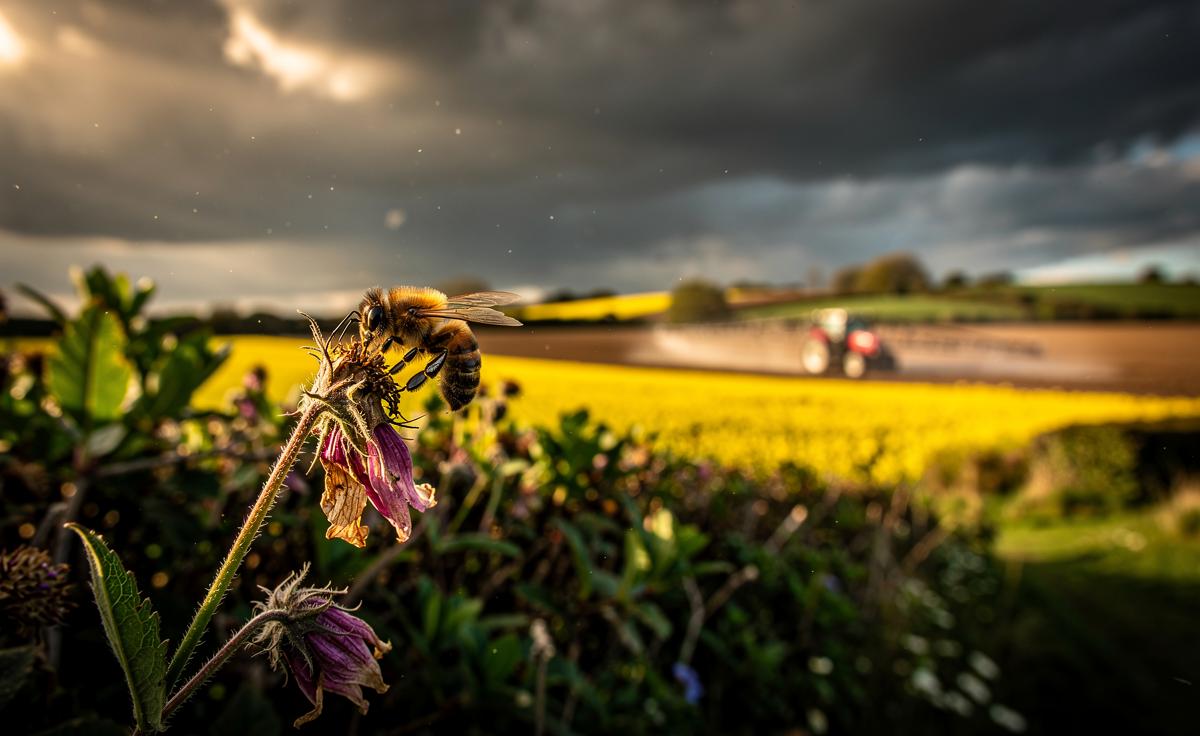
The hum that once stitched together Britain’s hedgerows and orchards is thinning. Bees, both managed honeybees and a rich cast of wild cousins, are slipping from the soundscape in ways many barely notice until harvests falter or prices rise. This is a quiet crisis, and a complex one, rippling from farms to high streets. It touches food security, biodiversity, and the cultural landscapes that define the countryside. Scientists point to converging pressures: shrinking habitats, chemical exposure, parasites, and a changing climate that scrambles the timing of flowering and forage. Bees are not a luxury; they are infrastructure. The year 2026 will test whether we treat them that way.
What’s Driving the Collapse
Start with space. The UK has lost around 97% of its wildflower meadows since the 1930s, stripping bees of nectar-rich pit stops across the seasons. Intensified agriculture has removed hedgerows and field margins, while tidy lawns and paved gardens starve urban pollinators. Food becomes scarce between spring bursts of blossom and late-summer blooms. Hungry bees are vulnerable bees.
Then come chemicals. Insecticides such as certain neonicotinoids can disorient foragers and weaken colonies; herbicides reduce floral diversity; fungicides interact in harmful cocktails. Add the Varroa mite and viral pathogens and you have a relentless drain on colony health. Multiple stressors act together, not in isolation. One “safe” exposure on a good day becomes deadly when nutrition is poor, weather is erratic, and parasites bite.
Climate change completes the trap. Warmer winters disrupt overwintering. Drought shrivels flowers. Sudden downpours keep pollinators grounded. Mismatch increases: blossoms peak before bees emerge, or vice versa. For many species—especially specialist solitary bees—the window to feed, mate, and nest narrows. The result is a systemic weakening of pollination networks, hard to spot in a single field, unmistakable in the long view.
Why Bees Matter to Food Security
Roughly three-quarters of leading food crops benefit from animal pollination. Bees are the main workforce. They boost yields, but also quality: better-shaped berries, heavier apples, oilseed with higher set. Pollination services are worth hundreds of billions of dollars globally each year, a figure that doesn’t count the insurance they provide against crop failures. Without bees, supermarket shelves would look alarmingly bare. Prices would be jumpier, diets duller, and nutrition poorer, particularly for fruits, nuts, and vegetables.
Not every plant needs insects, and that nuance matters for policy. Yet even crops with “moderate” reliance can see sharp gains from abundant, diverse pollinators. Diversity is key: different bee species forage in different weather, on different flowers, at different times. Lose that spread and resilience evaporates.
| Crop | Pollinator Reliance | Typical Outcome Without Bees |
|---|---|---|
| Almonds | Essential | Minimal set; uneconomic yields |
| Apples | High | Misshapen fruit; lower yields |
| Oilseed rape | Moderate | Reduced seed set and quality |
| Strawberries | High | Smaller, less uniform berries |
| Coffee | Variable | Lower yields; quality shifts |
In short, bees underpin food security and dietary diversity. When their numbers fall, farmers must spend more—on hired hives, on hand pollination in extreme cases—or accept losses borne by households, especially the poorest.
The UK Front Line: Fields, Hedgerows, and Cities
Britain’s bee story is intensely local. A coastal heath, a Yorkshire orchard, a suburban verge: each offers different forage, nesting sites, and risks. The long-term erasure of wildflower meadows and the simplification of rotations have hit specialist bees hard. Some bumblebee species have retreated north and west; others cling to fragments stitched together by hedgerows. Connectivity is survival. A single flowering strip won’t save a landscape of deserts.
Yet there is progress. Agri-environment schemes now pay for flower-rich margins, winter bird food mixes that spill nectar into spring, and restored hedgerows that act as green corridors. Urban councils are trialling “no-mow” regimes, while residents swap sterile lawns for pollinator-friendly planting. Cities, surprisingly, can rival rural areas for forage if managed with bees in mind.
Still, tensions persist: pest outbreaks in crops, inconsistent local authority policies, and the lure of short-term yields. The difference between success and failure will be consistency—funding that lasts, advice that works on real farms, and honest monitoring that tracks not just honeybees but the wild pollinators doing vital, often uncounted, work.
What We Can Do in 2026
Choices made this year matter. Governments can set clear pesticide reduction targets, enforce science-based approvals, and reward Integrated Pest Management that uses thresholds, biocontrols, and precision applications before chemicals. They can turbocharge landscape recovery: expand wildflower restoration, protect brownfield biodiversity hotspots, and link habitats with hedgerows and riparian buffers. Policy must move from pilots to scale.
Farmers hold decisive tools. Diversify rotations. Plant multi-season flower mixes. Stagger mowing. Leave tussocky grass and bare ground for nesting. Monitor pests, not perceptions. Where honeybees are introduced, balance stocking rates to avoid starving wild bees. Invest in bee-safe water sources and reduce night spraying that catches foragers on the wing.
Citizens and businesses are not bystanders. Turn lawns into pollinator corridors, avoid garden pesticides, choose native plants, and support brands that verify pollinator-positive supply chains. Retailers can pay premiums for bee-friendly standards; insurers can reward farms that cut risk through habitat. Fund research on Varroa control and disease spillover, and back long-term monitoring so we see trends before they become headlines.
Bees won’t vanish overnight, and that is the danger. Decline unfolds quietly, field by field, until absence feels normal and recovery looks impossible. Yet the fix is within reach: habitat at scale, smarter chemistry, resilient farming, and communities that notice the hum and fight for it. The dividend is abundant food, richer nature, and landscapes that can weather shocks. As 2026 begins, what part will you play in turning a silent decline into a loud, shared recovery?
Did you like it?4.6/5 (22)