In a nutshell
- 🧪 Chemistry that works: use 250 ml vinegar + 1 tsp salt (hand‑warm), as acetic acid lifts oxides; choose glass/ceramic bowls and do not mix vinegar with bleach.
- ⏱️ Fast routine: inspect settings, soak 60–180 seconds, lightly brush, rinse thoroughly, optional bicarbonate neutralise, then dry; keep total exposure under five minutes.
- 💍 Material safety: Safe: stainless steel, copper, brass, solid 14–18k gold; Caution: sterling silver; Avoid: pearls, opals, turquoise, plated items, glued stones, and watches/mechanisms.
- 🧰 Kit checklist: white distilled vinegar, fine salt, soft toothbrush, microfibre cloth, clean water, optional bicarbonate, and a timer—short dips are safer.
- 🧠 Troubleshooting and care: blue‑green solution signals oxidation—finish fast; stop at any sign of pitting or film; store in anti‑tarnish pouches with silica gel and buff regularly.
It sits quietly in your kitchen cupboard, yet it can make dull jewellery sparkle before the kettle boils. The humble mix of salt and vinegar has long been whispered about as a frugal fix, a quick dip that erases grime and restores shine in minutes. Not magic. Chemistry. Used thoughtfully, it’s a nimble cleaner for everyday pieces and hardy metals, saving a costly dash to the jeweller’s bench. But it’s not a universal cure. The right recipe and careful timing matter, as do the materials you’re cleaning. Know your metal, test your stones, and resist the temptation to over-soak. Here’s how to use it like a pro.
What You’ll Need and Why It Works
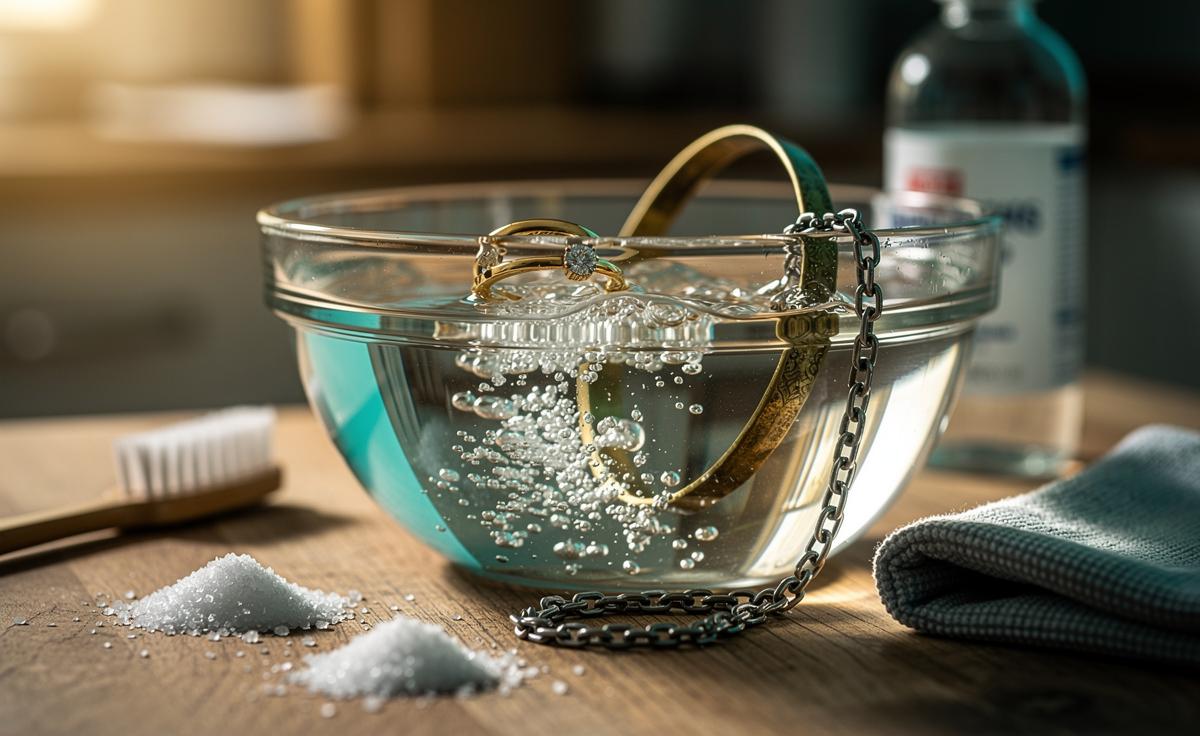
For the classic mix, reach for white distilled vinegar (5% acetic acid) and fine table salt (sodium chloride). A practical starting ratio is 250 ml vinegar to 1 teaspoon salt. Warm—not hot—vinegar speeds things along; think hand‑warm water bath, not a simmer. You’ll also want a soft toothbrush, a non‑metal bowl, a microfibre cloth, and fresh water for rinsing. Optional but useful: a pinch of bicarbonate of soda for a neutralising rinse and a jeweller’s loupe to check stone settings.
Why it works is elegantly simple. Acetic acid loosens mineral films and some light metal oxides. On copper and brass, salt helps dissolve oxidation products that cause brown and green tarnish, lifting them into solution. On robust alloys and stainless steel, the solution dislodges greasy residues and dulling films fast. It is less suited to heavy silver sulfide tarnish on sterling silver, which is better addressed by a foil-and-bicarbonate reduction bath or professional polishing to avoid pitting.
Respect the chemistry. Never mix vinegar with bleach or chlorine-based cleaners—that can release hazardous gas. Avoid reactive containers such as aluminium; glass or ceramic is safer. If in doubt about a stone or plating, do a 60‑second spot test on an inconspicuous area, then rinse and inspect under bright light before proceeding.
Step-by-Step: Cleaning in Minutes
Start with a quick inspection. Check clasps, prongs and bezels. Loose stones? Stop and get them tightened first. Prepare the bath: stir 1 teaspoon salt into 250 ml warm vinegar until dissolved. Place the jewellery in a glass bowl and pour the solution over it. For hardy metals like stainless steel, brass and solid higher‑karat gold, soak for 2–3 minutes; for mixed or unknown pieces, limit it to 60–90 seconds. Time matters. Short dips are safer and usually sufficient.
After soaking, brush gently with a soft toothbrush, paying attention to crevices where hand cream and soap scum collect. You’re loosening residue, not sanding the surface, so keep pressure light. If you see the solution turning faintly green with copper alloys, that’s oxidation lifting—normal, but it’s your cue not to overdo it. Rinse immediately under running lukewarm water for at least 30 seconds.
To finish, neutralise and dry. A brief swish in clean water with a pinch of bicarbonate helps quench leftover acidity, then rinse again. Pat dry with microfibre and air‑dry fully before storage, as moisture invites new tarnish. For a quick sheen, buff with a clean cloth. If the item still looks dull, repeat only once, keeping total exposure under five minutes. Persistent tarnish signals it’s time for a different method, not a longer acid bath.
Which Metals and Gems Are Safe—and Which Are Not
Salt-and-vinegar cleaning suits many, but not all, jewellery materials. It’s excellent for stainless steel, copper, and brass, and generally fine for solid 14–18k gold with brief contact. It can be acceptable for very hard gems—diamond, sapphire, ruby—set in robust mountings, provided exposure is short and rinsing is thorough. Where it falters is as crucial as where it shines. Do not use on pearls, opals, turquoise, coral, or any porous or treated stones. Avoid gold‑plated and silver‑plated pieces too, as thin plating can dull or lift.
| Material | Safe to Use? | Max Time | Notes |
|---|---|---|---|
| Copper / Brass | Yes | 2–3 min | Quickly removes brown/green oxidation; rinse well to prevent re-tarnish. |
| Stainless Steel | Yes | 2–3 min | Great for watch straps and chains (avoid movement/case). |
| Solid Gold (14–18k) | Generally | 1–2 min | Brief dip only; can leach base metals in low karat alloys. |
| Gold-plated / Vermeil | No | — | Risk of thinning or lifting the plating. |
| Sterling Silver | Caution | ≤1 min | May not remove sulfide tarnish evenly; prefer foil + bicarbonate. |
| Diamond / Sapphire / Ruby | Yes | 1–2 min | Safe for the stones; ensure secure settings and thorough rinse. |
| Pearls, Opals, Turquoise, Emerald (oiled) | No | — | Porous or treated; acid and salt can irreversibly damage. |
| Costume Jewellery (glued stones) | Caution | ≤1 min | May weaken adhesives; test briefly and avoid brushing. |
When in doubt, test and err on the side of speed. If you see dulling, colour change, or a rainbow sheen, stop immediately, rinse, and switch to a gentler method such as warm soapy water. Important: never immerse watches or items with delicate mechanisms. Clean straps only, keeping liquids well away from cases and crowns.
Troubleshooting, Risks, and Pro Tips
If the solution turns noticeably blue‑green with copper alloys, it’s doing its job—but it’s also a timer. Finish fast, rinse, and dry. A chalky film after drying means you didn’t rinse long enough; go back under running water and buff. Cloudiness on a stone suggests a treatment or porosity you didn’t spot; stop using acid entirely. Any sign of pitting or loss of plating is your red flag to halt. Switching methods beats salvaging damage.
Reduce future tarnish by storing pieces in anti‑tarnish pouches with silica gel and wearing jewellery after applying lotions or perfume. Keep a microfibre cloth in your dressing drawer for quick, dry buffs; it’s astonishing how often a simple wipe restores sparkle. For silver heirlooms with stubborn sulfide, try a foil-and-bicarbonate bath to reverse the tarnish rather than dissolve it, or book a professional polish. Finally, work in good light and set a timer. Precision—measured dips, immediate rinses—turns a kitchen remedy into a reliable routine.
The salt-and-vinegar mix is a thrifty, effective ally when used with judgement: brief dips, careful brushing, and thorough rinsing bring back shine without drama. It’s not a cure‑all, and that’s fine; its strength is swift maintenance for robust metals and hard stones, the sort of everyday pieces we actually wear. If you pair it with smart storage and regular dry buffing, your jewellery will look cared‑for, not just cleaned. Which piece will you rescue first—and what story will it tell once it’s gleaming again?
Did you like it?4.4/5 (30)