In a nutshell
- 🍋 The lemon + baking soda duo works through mild acidity, gentle abrasion, and fizzing action to lift grime and odours; it sanitises everyday boards but does not sterilise.
- 🪵 For wooden boards: scrape, wash, sprinkle baking soda, scrub with a lemon half, allow contact time of 5–10 minutes, rinse hot, dry on edge, then oil to protect the grain.
- 🧴 For plastic boards: pre‑wash, apply baking soda, scrub with lemon or a nylon brush, leave 10–15 minutes for stains, rinse until squeaky, optionally add dishwasher heat for extra sanitation.
- 📏 Handy measures: use 2–4 tbsp baking soda per medium board and half a lemon; keep paste moist, avoid soaking wood, and target knife grooves for best results.
- ⚠️ Hygiene and safety: separate boards for raw and ready‑to‑eat foods, use approved sanitisers or heat after raw poultry, sun‑dry briefly, and replace boards with deep grooves, persistent odours, or mould.
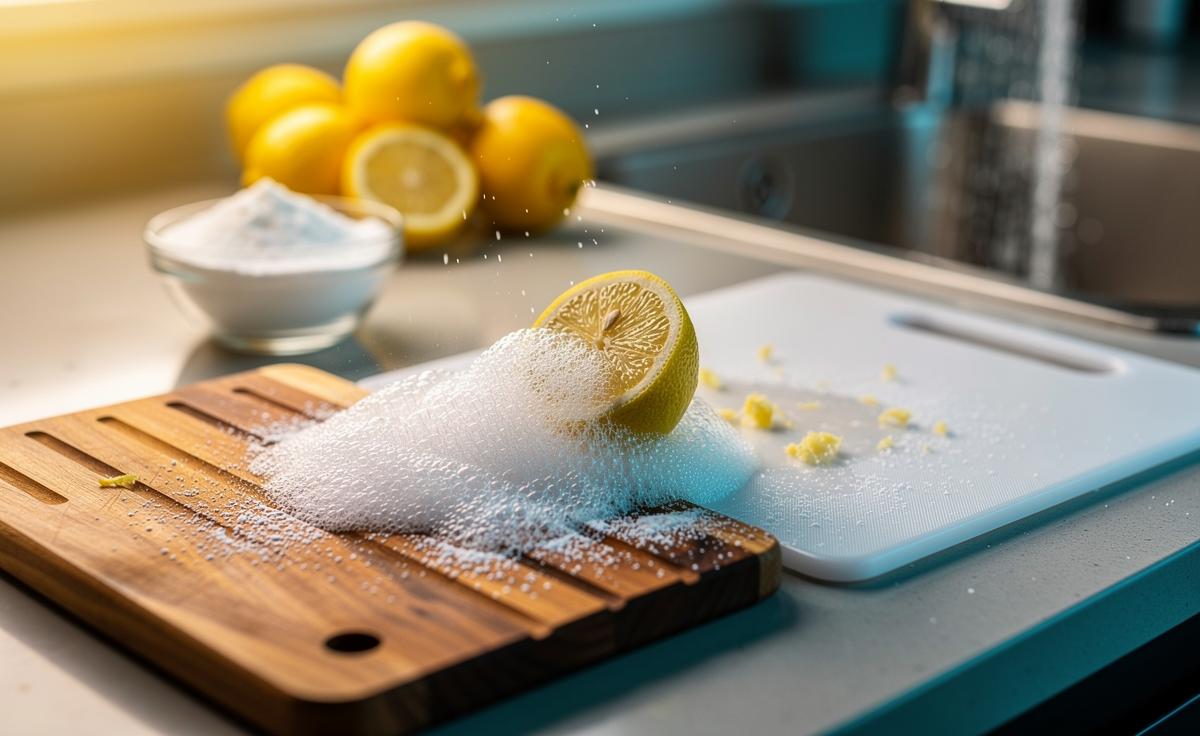
Home cooks reach for bleach and fancy sprays, but your pantry hides a gentler fix. A cut lemon and a mound of baking soda can sanitise cutting boards quickly, safely, and with a freshness commercial products rarely match. The trick is simple chemistry paired with elbow grease. Citric acid dissolves grime and light limescale, while sodium bicarbonate lifts residues and neutralises odours. Done right, the duo tackles stains, fishy whiffs, and most day‑to‑day microbes. Not witchcraft. Just smart, low‑waste cleaning. This method sanitises surfaces but does not sterilise them, and for high‑risk foods you’ll still want heat or approved sanitisers. Here’s how to get the best from lemon and baking soda, board by board.
Why Lemon and Baking Soda Work
The powerhouse here is the contrast. Lemon brings citric acid, which helps break down fat films and destabilise some bacterial cell walls. Baking soda is mildly alkaline, a fine abrasive, and an effective odour sponge. Rub them together and you trigger a fizzing acid–alkali reaction that releases carbon dioxide microbubbles. Those bubbles help lift dirt from knife grooves while the rind’s natural oils contribute solvent power. It looks theatrical. It’s also practical.
There are limits. These ingredients are sanitisers for everyday kitchen hygiene, not hospital‑grade disinfectants. They reduce microbial load when combined with thorough mechanical scrubbing and good rinsing, especially on wooden boards with self‑healing fibres. On plastic boards, the mix excels at deodorising and brightening stains from beetroot, turmeric, and onion. For boards hit by raw poultry juices or heavily scored by knives, use this routine as a pre‑clean, then escalate to high‑heat dishwasher cycles or a food‑safe sanitising step. The science is simple, the outcome reassuring: cleaner, fresher boards without harsh smells or lingering residues.
Step-by-Step Method for Wooden Boards
Wood is forgiving but particular. It hates soaking, loves drying, and rewards gentle abrasion. Start by scraping off scraps with a bench scraper or the edge of a spoon. Wipe with hot, soapy water and a cloth, then rinse. Pat dry. Now sprinkle a generous layer of baking soda over the board, paying attention to any darkened patches or onion scars. Halve a fresh lemon. Use the cut face as your scrubber, squeezing as you work to moisten the powder. Big circles, then along the grain. Expect fizz. That’s the lift you want.
Give the surface two to three thorough passes. Leave the foamy paste to sit for 5–10 minutes on everyday messes, up to 15 for stubborn smells. Do not soak wooden boards under water or leave paste to dry hard in deep cracks. Rinse with hot water, wipe clean, then stand the board on edge to air‑dry fully. Once dry, nourish the surface: a few drops of food‑safe mineral oil, rubbed along the grain, will repel moisture and stains. Repeat this lemon–soda treatment weekly for heavy use, fortnightly otherwise. Replace boards with gaping grooves or blackened mould spots you can’t remove.
Step-by-Step Method for Plastic Boards
Plastic tolerates moisture and heat, so you can be bolder. Begin with a hot, soapy wash to remove fats. Rinse. Dust the surface with baking soda, then rub in using a lemon half or a nylon brush dipped in lemon juice. Focus on knife channels; they trap odours and pigments. The gentle grit of bicarbonate polishes without gouging, while the acid lightens stains.
For routine refreshes, five minutes of contact time is fine. For curry yellowing or beetroot pink, extend to 10–15 minutes, rewetting with lemon as needed to keep the paste active. After scrubbing, rinse thoroughly until the squeak returns, then either air‑dry upright or run the board through a hot dishwasher cycle (70°C or above) to add heat sanitation. If the board is deeply scarred, no amount of fizz will fully sanitise those micro‑trenches. Retire it to craft duty or the recycling stream if your council accepts rigid plastics. Keep one plastic board reserved for raw proteins and another for fruit and bread to curb cross‑contamination.
| Board Type | Baking Soda | Lemon | Contact Time | Notes |
|---|---|---|---|---|
| Wood (30×20 cm) | 2–3 tbsp | 1 half, juiced while scrubbing | 5–10 mins | Keep paste moist; avoid soaking |
| Plastic (30×20 cm) | 2–4 tbsp | 1 half or 3 tbsp juice | 10–15 mins for stains | Dishwasher‑safe boards can be heat‑treated after |
Hygiene Tips, Safety Caveats, and When to Use Stronger Measures
Lemon and bicarbonate shine as a low‑impact, low‑cost routine. Pair them with habits that do the heavy lifting. Use separate boards for raw meat and ready‑to‑eat foods. Wash boards promptly in hot, soapy water, not hours later. Dry on edge for airflow. Ventilate your kitchen; odours dissipate faster. Never rely on this method alone after handling raw poultry, shellfish, or eggs. In those cases, a high‑heat dishwasher cycle or a food‑safe sanitiser at the right concentration is the safer bet.
Got a catering‑size board or a weekend barbecue’s worth of meat juices? Pre‑clean, then use a peroxide spray (3%) or a chlorine solution mixed to label instructions, allowing proper contact time before rinsing. Avoid harsh bleaches on prized wooden boards; they can raise grain and leave smells. Sunlight helps: a short spell in indirect sun speeds drying and offers mild UV sanitation. Finally, inspect monthly. If you can’t scrub out a smell, if black mould persists at the handle, or if grooves catch your nail, replace the board. Your knives — and your gut — will thank you.
Used well, the lemon‑and‑soda routine is a small domestic pleasure: bright scent, quick results, minimal waste. It respects timber, rescues plastic, and keeps your prep space honest. You’ll still need heat or a certified sanitiser for riskier jobs, but for everyday cooking it’s a dependable rhythm: sprinkle, scrub, fizz, rinse, dry, oil. Simple, thrifty, effective. Are you ready to try it tonight — and which board in your kitchen would benefit first from a citrus‑sparked clean?
Did you like it?4.5/5 (23)