In a nutshell
- 🛋️ Understand suitability: olive oil can soften and revive protected leather, but aniline, nubuck, suede, bonded, and faux are high-risk; always patch-test and watch for darkening or tackiness.
- 🧪 Follow the method: clean first, conduct a 24-hour patch test, apply a tiny amount on a cloth (never directly), work in light circles, then buff and let it dwell before repeating sparingly.
- 🧴 Prevent issues: use microscopic amounts, keep leather cool and out of sun, blot excess immediately, and if over-applied, dust with cornflour/bicarbonate; consider a light beeswax balm on protected leathers only.
- 💷 Manage expectations: this is a low-cost, stopgap for dryness and minor scuffs, not deep cleaning; space treatments (quarterly at most) and maintain with regular dusting, not repeated oiling.
- 👩🔧 Know when to call a pro: for ink, deep scratches, colour loss, or flaking topcoats; check warranty/care plan terms before DIY to avoid invalidating coverage.
Your kitchen cupboard hides an unlikely leather whisperer: olive oil. Used intelligently, this pantry staple can revive a tired sofa’s suppleness, soften minor creases, and coax back a gentle sheen. Done badly, it can leave dark patches and sticky residue. The difference rests on method, leather type, and restraint. Always test first and use the lightest possible touch. As a UK homeowner, you may not want specialist creams for every spill or scuff; a careful olive oil treatment can bridge the gap between professional servicing and day‑to‑day care. Here’s how to make it work, what to avoid, and when to call a pro.
Why Olive Oil Works on Leather (and When It Doesn’t)
Leather is skin. It loses natural fats over time, becoming stiff and dull. Olive oil, being an emollient, can re-lubricate fibres, reducing the appearance of light scratches and dryness. It doesn’t “feed” leather in a mystical sense; it simply restores slip between fibres so creases ease and colour looks richer. The catch: uncontrolled absorption can darken and blotch. Oils also oxidise, which risks odour and tackiness if overused. That’s why product choice and leather type matter. Protected, pigmented leather tolerates a subtle application. Open-pore hides, like aniline and nubuck, are far less forgiving and stain instantly.
| Leather Type | Suitability | Notes |
|---|---|---|
| Pigmented/Protected | Generally safe in tiny amounts | Topcoat reduces absorption; test first. |
| Semi-aniline | Use sparingly | May darken slightly; blend carefully. |
| Aniline | High risk | Very absorbent; prone to tide marks. |
| Nubuck/Suede | Not recommended | Will stain and mat fibres. |
| Bonded Leather | Not recommended | Coatings can blister or peel. |
| Faux Leather (PU/PVC) | Avoid | It’s plastic; use PU-safe cleaners. |
If you can’t positively identify your leather, treat it as delicate. That means minimal product, a slow approach, and a readiness to stop the moment you see uneven darkening. For many, a safer path is spot-conditioning only on scuffed areas, not the whole sofa.
Step-by-Step: Restoring a Leather Sofa with Olive Oil
Assemble sensible tools: a microfibre cloth, a cotton swab, a clean soft brush, and high-quality extra-virgin or light olive oil. Vacuum seams gently to lift grit that would otherwise act like sandpaper. Dampen a cloth with distilled water and a drop of mild soap; wipe, then dry thoroughly. Never apply oil to a dirty surface. Perform a patch test on an inconspicuous area, such as behind a cushion zip or under the frame. Apply a pin-head of oil, buff, and wait 24 hours to assess colour shift and feel.
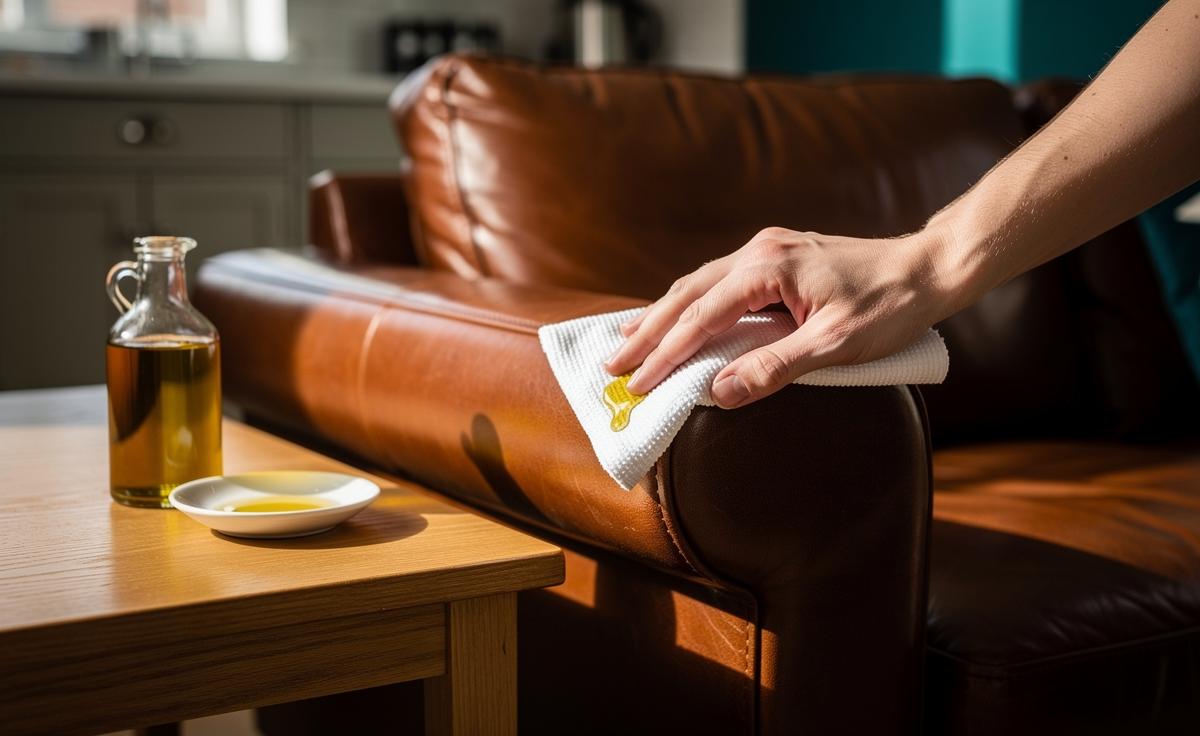
Ready to proceed? Work section by section. Place a tiny drop—think pea, not puddle—on the cloth, not directly on the leather. Massage in light circles, feathering outwards to avoid a ring. Less is more. After a minute, use a dry edge of the cloth to remove any excess. Allow 30–60 minutes’ dwell time so the oil settles. If the leather still looks thirsty, repeat with half as much product. Stop at the first sign of stickiness.
Finish with a brisk buff using a fresh microfibre to lift sheen without glare. Creases should appear relaxed, and light scuffs softened. Leave cushions off the sofa for two hours so air can circulate. Avoid sitting on treated areas overnight to prevent imprinting and uneven wear while the surface acclimatises.
Preventing Stains, Odours, and Tackiness
The chief complaint about olive oil on leather is fattiness that never quite dries. The cure is precision. Use microscopic amounts. Work on cool leather, away from radiators and direct sun, which accelerate oxidation. If you over-apply, blot immediately with a clean microfibre, then dust the spot with a pinch of cornflour or bicarbonate of soda; wait 15 minutes and brush off to lift residual oil. Do not scrub aggressively. Scratches responding to oil should fade subtly; dramatic colour change signals overuse. For uniformity on larger panels, blend edges carefully with a dry cloth to erase tide lines.
Odour control is about freshness. Choose a bottle of oil that smells clean and store it capped, away from heat. Rancid oil equals a stale sofa. Crack a window while you work. After treatment, a neutral leather balm with beeswax can add a dry touch barrier on protected leathers, further reducing tack—test first, and avoid wax on aniline or suede. Schedule light maintenance quarterly at most. Weekly dusting, not constant oiling, keeps pores clear and colour stable.
Remember: conditioning is not cleaning. For dye transfer, ink, or greasy takeaway splashes, use a leather-safe cleaner, then condition only once the surface is truly clean and dry. Spot care beats blanket treatment every time.
Costs, Longevity, and When to Call a Professional
A careful olive oil refresh costs pennies compared with specialist conditioners and far less than reupholstery. It’s a pragmatic, stopgap technique for light dryness, micro-cracking, and minor scuffs. Results typically last several weeks, depending on central heating, sunlight, and how often the sofa is used. Expect to re-buff occasionally to keep a natural, not glossy, finish. If the leather looks shiny and slick, you’ve gone too far. Space treatments generously; constant oiling clogs pores and attracts dust. Keep throws off for a day after treatment to avoid imprinting weave patterns into softening leather.
Know the limits. Deep colour loss, ink stains, pet scratches through the pigment, and flaking topcoats need a leather technician. Pros can colour-match, re-dye, and re-seal surfaces so wear blends invisibly. If your sofa is under warranty or a care plan, check terms before DIY work; some policies exclude claims after non-approved products touch the leather. When in doubt, a paid assessment can prevent costly mistakes and guide whether your hide is aniline, semi-aniline, or protected.
As a rule, if a patch test produces uneven dark patches or lingering tack after 24 hours, stop and seek advice. Your goal is resilience and comfort, not a quick shine that compromises longevity.
Used wisely, kitchen olive oil can coax life back into a leather sofa, relaxing creases and restoring a gentle glow without shop-bought conditioners. The secret is moderation, patience, and honest appraisal of your leather type. Keep the surface clean, the room ventilated, and your cloth barely damp with oil. Always patch-test, always buff, and always stop early. In a world of expensive fixes, this careful, frugal touch can be enough for everyday dryness. Where on your sofa will you try a cautious test spot first, and what subtle changes will you look for before committing to a full treatment?
Did you like it?4.7/5 (23)