In a nutshell
- 🧊 Cold isn’t clean: keep fridges at or below 5°C; hardy bacteria like Listeria can grow; target high-touch zones to curb cross-contamination.
- 🗓️ Follow a practical schedule: clean spills immediately; do a weekly 5-minute reset; perform a monthly deep-clean (more often for infants, older adults, or immunocompromised households).
- 🧽 Pro deep-clean steps: unplug, empty to a cool bag, wash shelves/drawers with soapy water + bicarbonate, sanitise with food-safe products, clean door seals and the drain hole, and replug only when bone-dry.
- 📦 Smarter storage reduces cleaning: raw meat on the lowest shelf in a tray, ready-to-eat foods higher, keep airflow, use a fridge thermometer, label dates, and rotate with FIFO plus an “eat me first” box.
- 💷 Cleanliness saves money: better airflow and clear vents boost efficiency, cut food waste, prevent odours, and keep food safer and tastier.
Your fridge is the quiet engine of household health. It slows spoilage, stretches budgets, and curbs waste — when it’s cared for. Yet many of us delay the messy job until a sour smell or sticky shelf forces action. Food safety experts in the UK are blunt: cold is not clean. Pathogens persist at low temperatures, and drips travel. The good news? A realistic routine, not perfectionism, keeps risk low and food tasting fresher. Here’s what the science says, how often to act, and the step-by-step method that professionals use to make cleaning faster, safer, and almost painless.
What Science Says About Fridge Hygiene
The UK’s Food Standards Agency sets a clear baseline: keep fridges at or below 5°C. That temperature slows bacterial growth significantly, but it doesn’t stop it. Listeria monocytogenes, a hardy pathogen linked to ready-to-eat foods, can grow even in the cold. Raw juices from meat or fish can seep across shelves. Salad drawers trap moisture, creating microclimates where microbes thrive. Translation: a spotless-looking fridge can still harbour risk if spills and condensation linger. Cleanliness, not just coolness, is the protective layer that turns good storage into reliable food safety.
Experts also warn that odours and off-notes don’t always flag danger. The “sniff test” is unreliable for pathogens that don’t produce strong smells. That’s why consistent cleaning matters. Prioritise the high-touch zones — door handles, bottle ledges, egg holders, and the salad crisper — where fingers and packaging repeatedly meet. These areas drive cross-contamination. A regular wipe with warm, soapy water removes biofilms that allow bacteria to cling. Finish with a food-safe disinfectant as needed, then dry thoroughly to deter mould.
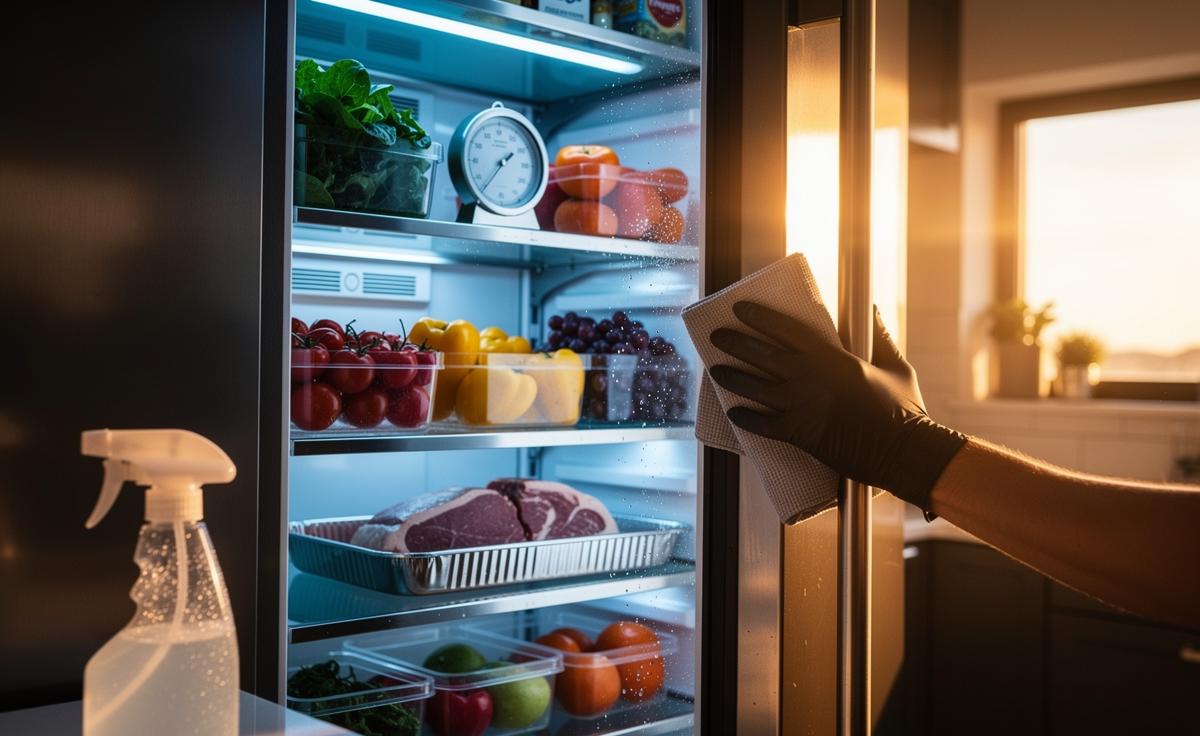
Design plays a role. Overstuffed fridges impede airflow, leading to warmer pockets at the door and top shelves. Store raw meat on the lowest shelf in a leakproof tray to contain drips. Keep ready-to-eat foods higher. Simple placement decisions reduce the cleaning burden and cut risk dramatically. Add a cheap fridge thermometer to verify temperature, especially in older or integrated units that hide fluctuations behind a tidy facade.
How Often to Clean: A Practical Schedule
“Little and often” beats the dreaded mega-scrub. For an average UK household, food safety specialists agree on a layered rhythm. After any spill, wipe immediately with warm, soapy water. Once a week, do a five-minute reset. Monthly, schedule a deep-clean that tackles drawers, seals, and hidden crevices. Households with infants, older adults, or anyone immunocompromised should be stricter, as should keen cooks handling raw poultry or seafood frequently. The more you cook and the busier your fridge, the more often you should clean. It’s about risk, not rules for their own sake.
| Frequency | Tasks | Why It Matters |
|---|---|---|
| After spills | Wipe with warm, soapy water; dry | Stops biofilms and odours forming |
| Weekly | Check use-by dates, discard spoiled items, quick shelf wipe | Prevents cross-contamination, reduces waste |
| Monthly | Deep-clean shelves, drawers, seals; sanitise | Removes buildup in high-risk zones |
| Seasonal | Defrost ice, clean condenser grille if accessible | Improves efficiency, maintains temperature |
Adjust for reality. Larger families, shared houses, or food lovers with packed fridges will need a fortnightly deep-clean to stay ahead. If you batch-cook, rotate tubs using FIFO (first in, first out) and label dates to prevent forgotten science experiments at the back. Consistency turns cleaning into a five-minute habit rather than a Saturday-killing chore. One final cue: if condensation lingers or odours persist despite fresh food, you’re overdue.
Energy prices make maintenance a money issue, too. A clean interior and clear vents help your appliance hold 5°C without grinding. That protects your groceries and your bill. Think of this schedule as preventive care: tiny interventions that extend the life of your food, and the fridge itself.
The Deep-Clean Method Professionals Use
Start smart. Always unplug before a deep-clean. Remove food to a cool bag with ice packs. Take out shelves and drawers, letting glass acclimatise to room temperature to avoid shattering. Wash components in warm water with mild washing-up liquid and a spoon of bicarbonate of soda to cut odours. Rinse, then air-dry fully. Inside the cabinet, wipe from top to bottom so drips don’t re-soil. Use a soft brush around vents, hinge points, and control panels. Don’t flood electrics.
For sanitising, apply a food-safe disinfectant or a diluted solution recommended by the manufacturer, then wipe dry. Avoid heavy bleach inside the fridge where residue can taint food. Focus on door seals — the dark, ribbed gasket is a crumb and mould magnet. Run a cotton bud along folds, then dry so the seal remains supple and closes tightly. This single step boosts hygiene and efficiency. Clean the drain hole (often at the back) with a dedicated brush to prevent pooling water and musty smells.
Finish with prevention. Place raw meat on a rimmed tray, line crisper drawers with a washable mat, and pop an open tub of bicarbonate of soda on a shelf to absorb odours. If accessible, gently vacuum the condenser grille or coils to improve cooling. Replug only when every surface is bone-dry. Return food in order: ready-to-eat items high, raw at the bottom, dairy mid-shelf where temperatures are most stable. Label leftovers with dates. Shut the door and let it return to 5°C before restocking heavily.
Smart Storage to Keep Cleaning Easy
Good organisation shrinks the cleaning load. Clear, stackable boxes corral leaky items; a shallow tray under jars catches rings and drips. Keep “use now” foods together so they’re seen first. Separate strong-smelling items — onions, soft cheeses — in sealed containers. Visibility is hygiene. When you can see it, you eat it, which means less decay and fewer sticky surprises. Use slim bins for condiments in the door, where temperatures fluctuate more, and keep milk in the coldest zone rather than the door if space allows.
Airflow matters. Don’t pack shelves until they’re solid; cold needs to circulate. A simple fridge thermometer tells you if your system works. If the needle creeps above 5°C, adjust the thermostat or reduce crowding. Store raw meat at the lowest point and seafood on ice packs if you’ll eat it the same day. Keep leafy greens dry; a quick spin and a paper towel in the crisper delays slime. Small habits compound into a cleaner, safer fridge.
Finally, respect labels. “Use-by” is about safety, “best before” about quality. Rotate weekly, placing older items to the front — the simple FIFO rule. Keep an “eat me first” box for near-dated goods to curb waste. If you meal plan, map shelf zones to days and dishes. It sounds fussy. It isn’t. It’s two minutes that reduce both scrubbing and binning, which is kinder to your wallet and the planet.
Your fridge doesn’t need perfection; it needs rhythm. Quick wipe-ups, a weekly reset, and a monthly deep-clean keep pathogens at bay, preserve flavour, and lower bills. The payoff is tangible: safer lunches, less waste, fewer Saturday marathons with a scouring pad. Start with one change — a thermometer, an “eat me first” box, or a calendar reminder — and build from there. The cleanest fridges belong to people who make it easy on themselves. What one habit will you adopt this week to make your fridge cleaner, calmer, and kinder to your food?
Did you like it?4.5/5 (28)