In a nutshell
- 🌱 A slow-drip bottle balances hydrostatic pressure, air exchange, and soil capillarity to hold moisture near field capacity, preventing overwatering while preserving root oxygen.
- ⚙️ Setup essentials: pick the right bottle (500 ml–2 L), make a 0.8–1 mm hole, target a flow rate of 1 drop every 2–5 seconds, insert at an angle with a coffee-filter disc, and test-adjust before potting.
- ✅ Pros vs. Cons: Pros—steady moisture, less runoff/leaching, low cost, travel-friendly; Cons—clogging/algae and not ideal for dry-down species (cacti, rosemary). Best for ferns, tomatoes, and thirsty houseplants.
- ⚖️ Why slow isn’t always better: without good drainage and substrate aeration, even a trickle can saturate roots; tune flow seasonally and avoid standing water to truly prevent overwatering.
- 📊 Monitoring & fixes: weigh pots, feel two depths, watch for yellowing or sour smells; if issues arise, pause, drain, and resume with slower calibration, or reposition the bottle to irrigate new root zones.
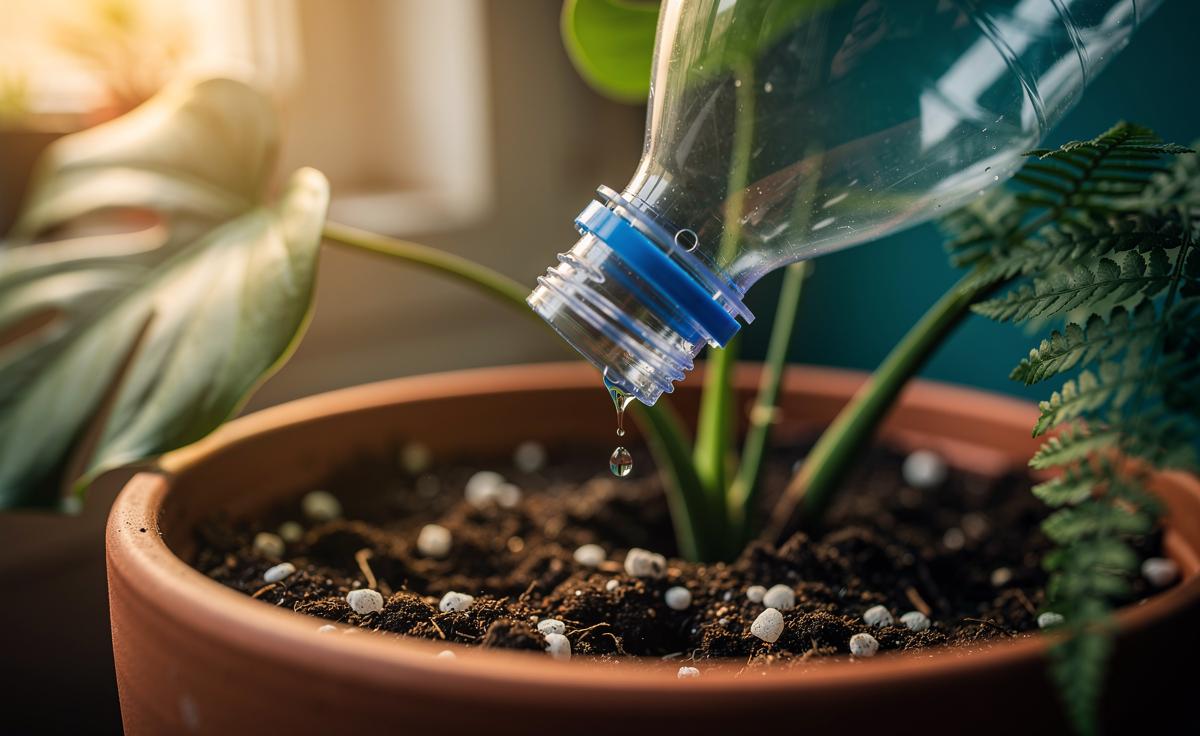
There’s a quiet satisfaction in watching a plant sip, not gulp. A simple slow-drip bottle—an inverted plastic bottle with a tiny hole in its cap—can deliver water at a measured pace that the soil can actually absorb. Over hours, not minutes, it feeds moisture to the roots while preserving oxygen in the potting mix. The result is smoother growth and fewer yellowing leaves. Steady release stops the sudden saturations that cause root rot, and it buys peace of mind when you’re away for a weekend. For thrifty gardeners and balcony growers, this is DIY irrigation that’s as much about plant health as it is about convenience.
How Slow-Drip Bottles Work: Physics Behind the Trickle
At heart, the slow-drip method balances hydrostatic pressure, air exchange, and the soil’s capillarity. When you invert a bottle with a pinhole in the cap, water doesn’t simply rush out. Instead, it releases until a tiny vacuum forms, then pauses until air enters to replace that volume. The size and shape of the hole, plus how easily air can backflow, governs the drip tempo. Meanwhile, the soil around the bottle neck acts like a sponge. As the root zone dries, it wicks more water; when it’s moist, the wicking slows. This self-moderating loop is why slow-drip watering is remarkably stable across changing conditions.
What does this mean for overwatering? Roots need oxygen as much as water. Gushing top-watering can saturate voids and drive out air, especially in dense or compacted mixes. A slow drip keeps the moisture band close to field capacity—that sweet spot where pores hold water while leaving space for air. The result is steadier transpiration, fewer fungus gnat outbreaks, and stronger microbial life in the rhizosphere. By matching delivery to uptake, the steady trickle prevents the prolonged saturation that suffocates roots and invites disease.
Setting Up a Reliable DIY Drip Bottle
Choose a clean 1–2 litre bottle for medium pots; smaller houseplants can thrive with 500 ml. Heat a pin or use a 0.8–1 mm drill bit to make one hole in the cap; start with one and add a second only if the flow is too slow. Fill the bottle, screw the cap on firmly, then invert and test the drip into a sink—aim for a rhythm of one drop every 2–5 seconds. Slide a coffee-filter disc under the cap to reduce clogging from soil fines. For most plants, slower and consistent beats fast and sporadic.
Push the bottle neck 5–8 cm into the substrate, angled slightly so the hole doesn’t press directly into soil. Place it nearer the pot edge for larger containers to encourage even spread. After 24 hours, check the top 3–5 cm of soil; it should be cool and slightly damp, not soggy. Weighing the pot before and after a day can help you adjust: a small, steady loss indicates appropriate uptake. If flow stalls, widen the hole fractionally; if puddling appears, reduce the hole or add coarse material (perlite, bark) around the neck.
| Bottle Size | Hole Count | Approx. Flow (ml/hr) | Pot Diameter | Refill Interval |
|---|---|---|---|---|
| 500 ml | 1 | 10–20 | 10–15 cm | 1–2 days |
| 1 litre | 1 | 15–30 | 15–25 cm | 2–3 days |
| 2 litres | 1–2 | 25–45 | 25–35 cm | 3–5 days |
Pros vs. Cons of Slow-Drip Compared With Top-Watering
The slow-drip bottle shines where ordinary watering cans fall short. Because the moisture front advances gradually, it curbs hydrophobic runoff in peat-free mixes and reduces nutrient leaching. Plants that resent “wet feet” benefit from a consistent, breathable root zone. For the gardener, it’s hands-off stability: fewer extremes, fewer rescue missions, and more predictable growth. A UK allotment holder told me he saw a 20% reduction in leaf drop on balcony chillies after switching to drip bottles during a warm spell—less stress, fewer surprises. Consistency is a growth habit as much as a watering method.
Still, it’s not magic. Bottles can clog with fines, algae can grow in bright windows, and certain species—cacti, succulents, Mediterranean herbs—prefer a pronounced dry-down. A bottle set too fast becomes a constant drizzle, pushing the mix toward saturation. In cold flats or low-light winters, plants transpire less; the same steady flow that worked in July might be too much in January. Slow-drip prevents overwatering only when drainage, flow rate, and plant demand are in sync.
- Pros: Steady moisture, less runoff, fewer salts flushed, low cost, travel-friendly.
- Cons: Potential clogging/algae, aesthetic clutter, not ideal for dry-down species.
- Best for: Thirsty annuals, ferns, tomatoes, tropical houseplants.
- Avoid for: Cacti, lithops, rosemary—plants needing dry cycles.
Preventing Overwatering: Why Slow Isn’t Always Better
Overwatering isn’t about how much water you add; it’s about how long the root zone stays airless. A slow-drip can still drown roots if the pot lacks drainage holes, the mix is compacted, or the hole is oversized. Blend a well-aerated medium—peat-free compost cut with perlite or bark—to keep pores open. Place the bottle away from saucer edges where water can pool, and never let the pot sit in standing water. In cool rooms or low winter light, reduce flow or pause the drip to match slower plant demand.
Practical calibration beats guesswork. Test flow for 24 hours, then adjust: smaller hole, filter disc, or a strip of tape to partially cover the aperture. Feel the soil at two depths; aim for moist below, barely damp at the surface. Track pot weight to learn each plant’s daily loss—many leafy houseplants drink more after repotting or in brighter positions. If leaves yellow from the base or the mix smells sour, pause the system, let the pot drain, and resume with a slower setting. When in doubt, choose the gentler drip and increase only as growth accelerates.
- Do: Use airy mixes, ensure free-draining pots, and monitor flow weekly.
- Don’t: Assume one setting suits all seasons or species.
- Tweak: Move bottles slightly to irrigate different root zones over time.
Used thoughtfully, the slow-drip bottle is more than a hack—it’s a plant-first irrigation habit that matches water delivery to real demand. It trims the peaks and troughs that stress roots, encourages even growth, and makes holidays less nerve-racking. A few minutes of setup yields days of stability, especially for thirsty summer crops and lush indoor jungles. Steady doesn’t mean soggy; it means predictable. How might you tune bottle size, hole count, and substrate to suit your particular mix of ferns, herbs, and fruiting pots this season?
Did you like it?4.4/5 (20)