In a nutshell
- 🧠 Planning ahead removes decision fatigue and temptation via pre-commitment and implementation intentions, with predictable meal times that blunt cravings.
- 🍽️ Satiety science: balance protein, fibre, and healthy fats to ensure glycaemic stability; texture and volume (soups, wholegrains, crunchy veg) keep you full and cut mindless nibbling.
- 🧰 Environment design works—use a disciplined shopping list, smart batch cooking, visible healthy defaults, and a scheduled snack to reduce cue-based snacking.
- ⚖️ Pros vs. cons: fewer impulse buys, steadier energy, and budget savings, but avoid rigidity and time drain by adopting a flexible structure with quick “plan B” meals.
- 🚀 Action steps: start small—two planned lunches, one batch-cook, and a pre-committed snack; consistent routines outpace willpower when deadlines bite.
In newsrooms and home offices alike, the British day runs on tea, deadlines, and—too often—whatever is within arm’s reach at 4 p.m. Yet there’s a quieter habit that consistently beats the biscuit tin: planning meals ahead. When you decide your food before your hunger peaks, you sidestep the very moment when willpower is weakest. That’s not asceticism; it’s logistics. As hybrid work reshapes routines across the UK, thoughtful planning transforms food from a series of panic decisions into a steady rhythm. Here’s how a simple plan reclaims your energy, trims unnecessary calories, and keeps your attention on the work that matters, not the snack drawer calling your name.
How Planning Disarms Decision Fatigue and Temptation
By mid-afternoon, your brain is running on cognitive fumes. That’s when decision fatigue kicks in, making the packaged, salty or sugary option feel like an easy win. Meal planning removes that choice entirely. You’ve pre-decided breakfast, lunch, and a realistic snack, so there’s no on-the-spot negotiation. Behaviourally speaking, this is pre-commitment: you structure your future environment to protect your future self. Reduce friction on the good choice, increase friction on the bad one, and autopilot works in your favour.
There’s another layer: planning creates predictability. When you know a satisfying lunch is coming at 12:30 and a protein-rich snack at 4, your brain stops scanning for emergency fuel at 3:15. That quell-the-urge effect is amplified by implementation intentions—the classic “If it’s 4 p.m., I’ll have Greek yoghurt and berries” script. As a reporter who has covered food culture for a decade, I’ve tested this during deadline weeks: the simple act of writing down meals for the next two days cut my mindless nibbling by half, without a single lecture about willpower.
Satiety Science: Timing, Texture, and Macros That Keep You Full
Snacking often masquerades as hunger when it’s actually a cliff-edge in blood sugar or mood. Planning lets you “engineer” meals around satiety—combining protein, fibre, and healthy fats to slow digestion and steady energy. A tuna-and-bean salad with olive oil, or a wholegrain wrap with chicken and crunchy veg, provides glycaemic stability that ultra-processed snacks rarely deliver. Meals that are deliberate in timing and composition blunt cravings before they start.
Texture and volume matter, too. Crisp vegetables, chewy wholegrains, and hydrated foods (think soups or stews) nudge you toward fullness with fewer calories. Planned portions also pre-empt the “I’ll just eyeball it” trap. The result is fewer random raids on the cupboard and more consistent energy across the afternoon. Dietitians often emphasise a practical cadence: a solid lunch within a set window and a programmed snack later, so you’re not white-knuckling it from noon to dinner. That’s not strictness; it’s smart scheduling.
| Approach | Typical Contents | Satiety Window | Snacking Risk |
|---|---|---|---|
| Planned Lunch | Protein + fibre + healthy fats (e.g., lentil salad with feta) | 3–4 hours | Low |
| Grab-and-Go | Refined carbs, minimal protein (e.g., pastry + latte) | 1–2 hours | High |
Environment Design: Lists, Batch Cooking, and the Snack-Proof Kitchen
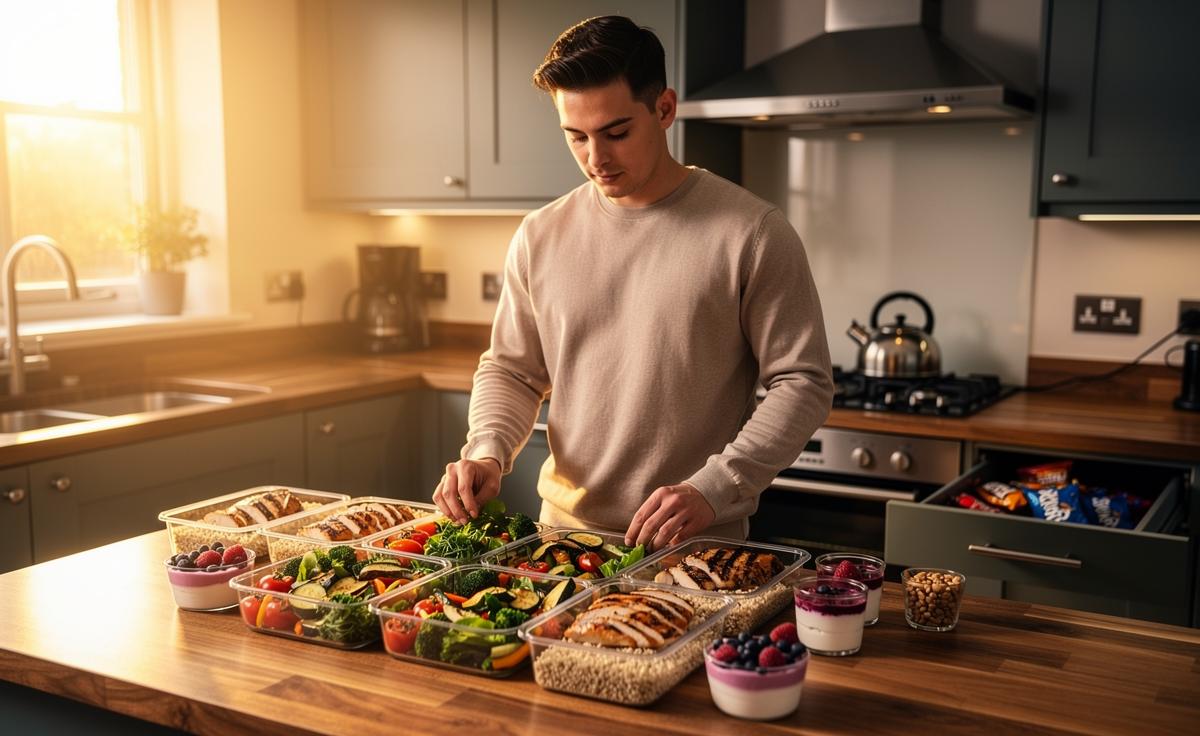
Planning is only as good as your environment. A shopping list acts as a contract: you buy the ingredients for the meals you’ve mapped, not the whims of a hungry wander around the supermarket. Batch cooking on Sunday—soups, grain salads, marinated chicken—creates a bank of ready-to-assemble parts. When a decent meal is two minutes away, crisps stop feeling “easier.”
Visibility shapes behaviour. Store chopped veg, yoghurt, and fruit at eye level; relegate confectionery to closed containers on high shelves. Keep a labelled “work snack” box with almonds, hummus pots, or wholegrain crackers to reduce cue-based snacking. For households, align routines: a posted weekly menu and a “cook once, eat twice” policy cut midweek chaos. My own test in a busy reporting week—cooking a traybake chicken with root veg on Sunday—meant lunches assembled in 90 seconds and precisely zero “emergency” chocolate raids before copy deadline.
- Plan: Two core lunches + one flexible option.
- Prep: Batch-cook proteins/grains; portion freezer-friendly servings.
- Place: Healthy defaults visible; treats out of immediate reach.
- Program: Pre-decided snack at a set time.
Pros and Cons of Meal Planning (and Why Perfection Isn’t the Goal)
Planning isn’t a diet; it’s a navigation tool. Done well, it frees you from the constant hum of food decisions and reduces spend on convenience items. It also supports “nutritional averaging”—you can balance richer meals with lighter ones across the week. But planning can tip into rigidity if you mistake the plan for law. Social spontaneity, travel, or a late train will happen; the solution is flexible structure: keep a couple of “plan B” meals (omelette, tinned fish and beans) ready to deploy.
Think of a plan as scaffolding, not shackles. On weeks with back-to-back interviews, I schedule two repeat lunches and one wildcard. That predictability curbs autopilot snacking while leaving room for a colleague’s birthday cake or a curry after a long shift. The pay-off is consistency over perfection: fewer chaotic gaps, more stable energy, and less mental clutter around food.
| Pros | Potential Pitfalls |
|---|---|
| Reduces decision fatigue and impulse buys | Can feel restrictive if too prescriptive |
| Improves satiety and energy stability | Requires upfront time and basic prep skills |
| Saves money via purposeful shopping | Risk of boredom without variety built in |
The quiet magic of meal planning is that it moves choice to a calmer moment. You decide when you’re clear-headed, then follow through when you’re busy. Across hectic UK workweeks, that means fewer panicked snacks, steadier concentration, and a more honest relationship with food. Start small—two planned lunches, one batch-cook, a pre-committed snack—and build from there. Strong routines beat strong urges. What one tweak to next week’s meals would most reduce your mid-afternoon rummage for something sweet, and how will you put that plan in place today?
Did you like it?4.7/5 (21)