In a nutshell
- 🧠 Beat weeknight chaos with Sunday prep that cuts decision fatigue, builds flexible protein–veg–grain bases, and uses habit cues and portion control to keep meals on track.
- ⏱️ Follow a two-hour blueprint: cook in parallel (roast veg, simmer grains, prep protein), whisk two sauces, then cool, label, and stack in airtight containers—base now, season later.
- ⚖️ Pros vs. Cons: Time and money saved, less waste, and lower stress versus upfront effort, storage needs, and monotony—solved with modular prep, smaller batches, and leaving “open” nights.
- 🛡️ Prioritise food safety: cool quickly, chill below 5°C, eat within 2–3 days, freeze extras, and reheat once until piping hot; pack lunches with ice packs and keep crunchy toppings separate.
- 🌱 Keep meals exciting and sustainable: rotate spices, acids, and fats, use frozen produce and trimmings, add texture boosters, and swap in beans and lentils for budget- and planet-friendly plates.
Sunday might be the only day when the kettle cools long enough to plan. Carving out a short window to meal prep can turn a chaotic week into something predictable, affordable, and nourishing. Rather than scrambling for a sandwich at 3 p.m., you open the fridge and find a neatly portioned lunch, a pre-cooked grain, and a jar of tangy dressing that makes vegetables sing. The secret isn’t culinary bravado—it’s systemising small choices you’ll thank yourself for on Thursday. As a UK journalist speaking to busy households and shift workers, I’ve seen this simple ritual save time, money, and stress while elevating everyday eating.
Why Sunday Meal Prep Beats Weeknight Guesswork
After a long day, the brain craves simplicity. That’s where decision fatigue derails good intentions. By committing one calm session to planning, chopping, and portioning, you externalise the choices you’d otherwise face when you’re tired and hungry. Choose once; eat well many times. Prepping a base of protein, veg, and whole grains establishes a flexible canvas: chicken thighs and roasted peppers today become fajita bowls; the same components tomorrow morph into a warm salad with couscous and lemon-tahini. You’re not cooking restaurant plates; you’re building blocks that assemble fast.
There’s also disciplined freedom in portion control. Batch-cooked grains and pre-weighed snacks make it easy to hit a sensible macro balance without counting every calorie. A Sunday-made vinaigrette turns leftovers into fresh-feeling lunches, minimising the lure of impulse buys. And when you pack a meal the night before—alongside a piece of fruit and a protein-rich snack—you create a habit cue that nudges healthier choices. It’s not willpower; it’s practical design for your future self.
A Practical, Two-Hour Sunday Blueprint
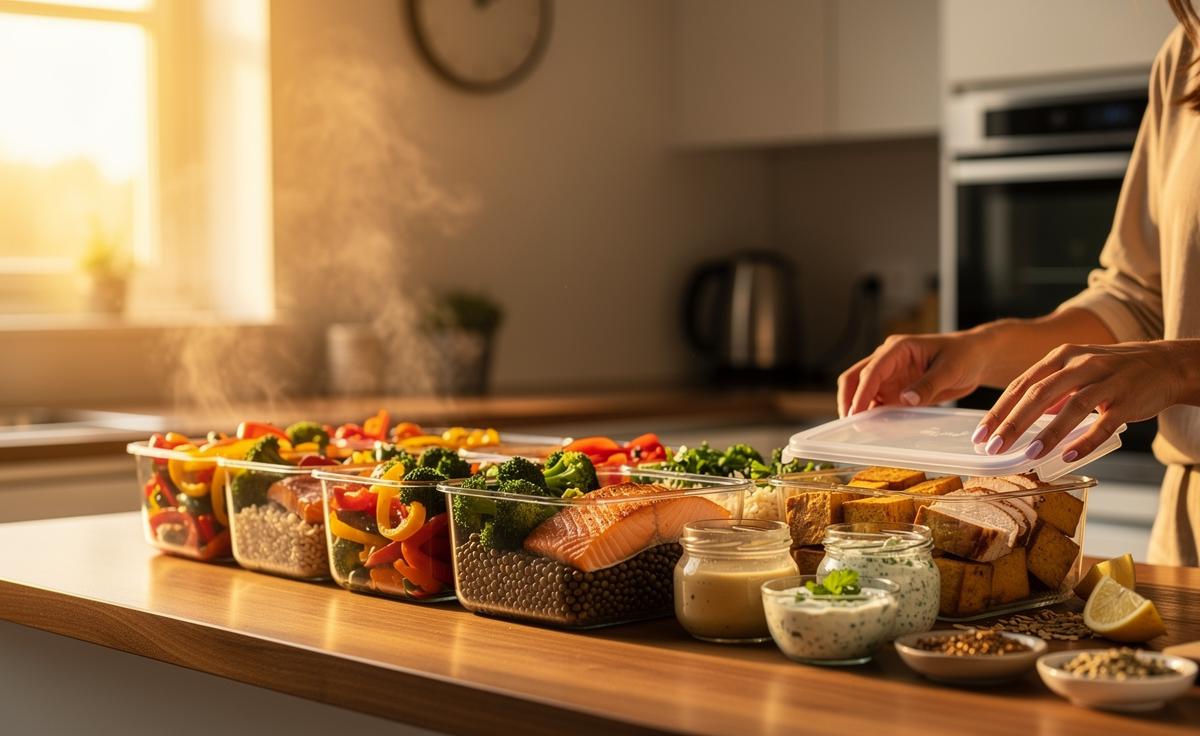
Think in parallel, not sequence. Start with hands-off tasks: get a tray of roasted vegetables into a hot oven and a pan of whole grains simmering. While they cook, prep a simple protein—bake salmon with lemon, braise lentils, or roast tofu. Whisk two versatile sauces (tahini-lemon; yoghurt-herb) and chop quick toppers: spring onions, pickled onions, or toasted seeds. Batch the base, season by mood. By the 60–90 minute mark, cool items on racks, then portion into airtight containers. Label, date, and stack by “eat first” order. You’ve built a fridge of options, not obligations.
Use “cook-once, eat-many” logic to stretch flavours. Roast a neutral veg mix (carrot, courgette, onion) that pairs with cumin on Monday and harissa on Wednesday. Cook extra grains to anchor breakfasts (savoury oats) and lunches (grain bowls). Don’t forget speed savers: washed salad leaves, canned beans, and frozen peas. They transform into last-minute add-ins that keep meals colourful and fibre-rich. When the base is ready, five-minute tweaks make midweek dinners feel new.
| Prep Item | Batch Size | Hands-on Time | Fridge Life | Freezer | Best Container |
|---|---|---|---|---|---|
| Roasted Veg (mixed) | 2 trays | 10 mins | 2–3 days | Yes | Shallow glass box |
| Whole Grains (brown rice/quinoa) | 6–8 portions | 5 mins | 3 days | Yes | Portion pots |
| Protein (lentils/chicken/tofu) | 4–6 portions | 15 mins | 2–3 days | Yes | Shallow, labelled |
| Dressings (tahini/yoghurt) | 1 jar each | 5 mins | 3–4 days | No | Jar with lid |
Pros vs. Cons: What Meal Prep Solves—and What It Doesn’t
The upsides are immediate. You tame the pricey “panic buy” and reduce food waste by cooking what you’ll actually eat. Energy dips are buffered by ready-to-go lunches, making nutritious choices feel almost automatic. In interviews with commuters and NHS staff, the word I hear most is “relief”. Prepping converts healthy eating from a moral test into a logistical win. There’s also creative headroom: a base of grains and roast veg becomes anything with a change of spices. The week’s meals can still feel seasonal and British—think mustardy greens, leeks, and roasted roots.
But there are trade-offs. Why batch cooking isn’t always better: if you hate repeats, a giant pot can drain motivation by Wednesday. The fix is modular prep—smaller batches and distinct sauces. Storage can be tight in shared homes; stackable containers and freezer-friendly portions help. Social spontaneity matters, too; leave one or two “open” nights. Finally, if Sunday vanishes, a 30-minute “mini-prep” (one tray veg, one pot lentils, one dressing) can rescue the week without grandeur. The goal is progress, not perfection.
- Pro: Saves time and money • Con: Requires upfront effort
- Pro: Encourages balanced portions • Con: Risk of monotony
- Pro: Cuts waste with planned shopping • Con: Needs container space
- Pro: Reduces stress at mealtime • Con: Demands basic organisation
Food Safety, Variety, and Sustainability for the Workweek
Good prep respects food safety. Cool cooked foods quickly, chill within two hours, and store below 5°C. Most cooked dishes are best eaten within 2–3 days; freeze spare portions for later rather than pushing the limits. Reheat until piping hot and avoid reheating the same item more than once. Label containers with dish and date—future you will thank you. When in doubt, freeze it out. For packed lunches, use insulated bags with an ice pack, and place delicate leaves or crunchy toppings in a separate pot to maintain texture until serving.
Variety is the antidote to “leftover fatigue”. Stock a small spice library—smoked paprika, garam masala, za’atar—and rotate acids (lemon, vinegar) and fats (olive oil, rapeseed oil). Sustainability fits naturally: plan dishes that reuse trimmings (broccoli stems in slaw), embrace frozen produce for peak nutrition, and portion realistically to curb waste. Swap meat with beans and lentils a few days a week for budget and climate wins. Small, repeatable tweaks keep meals exciting without extra work. Over time, your Sunday routine becomes a light touch that supports both health and planet.
- Quick flavour lifts: chilli crisp, pickled onions, citrus zest
- Texture boosters: toasted seeds, rye crumbs, roasted nuts
- Fresh-herb hacks: freeze chopped herbs in oil cubes
Meal prep rarely looks glamorous, but it’s quietly transformative. A couple of well-planned hours on Sunday can give you calmer mornings, better lunches, and dinners that don’t depend on willpower. You’ll save money, eat more plants, and free up evenings for the things that matter. The point is not to cook more—it’s to decide less. If you trial this approach next Sunday, what three base items, one protein, and two flavour accents would you prepare to make your week undeniably easier?
Did you like it?4.7/5 (28)